Wildfire (Case Study)
Academic Case Study: Development of Non-Halogenated Flame-Retardant Polymeric Materials for Electrical Infrastructure Wildfire Prevention
A Case Study in Collaborative Materials Development Between a Specialty Compound Manufacturer and a Power Transmission Equipment OEM
Authors: Howard Bradshaw and Thomas A. Guerriero, PhD
Abstract
This case study examines a collaborative research and development initiative between a specialty thermoplastic compound manufacturer (hereinafter referred to as "the Compound Manufacturer") and a manufacturer of power transmission line protection equipment (hereinafter referred to as "the OEM"). The project, conducted from Fall 2022 through mid-2023, focused on developing non-halogenated, flame-retardant polypropylene compounds to replace polyvinyl chloride (PVC) in critical electrical infrastructure components. The collaboration achieved significant technical milestones, including successful qualification testing to international flammability and electrical standards, though commercial adoption was ultimately not realized due to external market conditions. The case illustrates the challenges of materials substitution in regulated electrical infrastructure applications and demonstrates how initial technical collaborations can evolve into larger strategic opportunities, even when immediate commercial objectives are not achieved.
Keywords: flame-retardant polymers, non-halogenated compounds, electrical infrastructure, wildfire prevention, materials qualification, polypropylene, intumescent technology, collaborative R&D
1. Introduction and Industry Context
1.1 The Imperative for Non-Halogenated Materials in Electrical Infrastructure
The global electrical transmission and distribution infrastructure faces increasing pressure to enhance safety, environmental performance, and wildfire prevention capabilities (Soroudi & Ehsan, 2013; Panteli et al., 2015). Polyvinyl chloride (PVC) has historically dominated electrical insulation and protective applications due to its favorable cost-performance profile and inherent flame retardancy through chlorine content (Biron, 2015). However, PVC presents significant environmental and safety concerns:
- Environmental Concerns: PVC production and disposal generate dioxins and other hazardous byproducts, creating regulatory and corporate sustainability pressures (Thornton, 2002).
- Performance Limitations: PVC exhibits poor low-temperature properties and can emit corrosive hydrogen chloride gas during combustion, potentially damaging sensitive electrical equipment (Carty & White, 1996).
- Regulatory Drivers: Increasing regulatory scrutiny of halogenated flame retardants, particularly in European markets, has created demand for alternative solutions (Blomqvist et al., 2014).
The OEM's acquisition by a French multinational conglomerate with strong sustainability commitments accelerated the need for PVC substitution in their product portfolio, reflecting broader industry trends toward environmentally responsible material selection.
1.2 Wildfire Prevention and Power Infrastructure
Climate change has intensified wildfire risks across North America, with electrical infrastructure implicated as a significant ignition source (Radeloff et al., 2018). Power line protection equipment, including bird diverters and conductor protective casings, must maintain performance under extreme environmental conditions while minimizing fire risk. This application environment demands materials that combine:
- Excellent flame retardancy without halogenated additives
- UV stability for outdoor exposure
- Mechanical durability across wide temperature ranges
- Electrical insulation properties
- Cost-effectiveness for large-scale infrastructure deployment
1.3 Research Objectives
This case study analyzes the collaborative development process for a non-halogenated flame-retardant polypropylene compound designed for power transmission applications. The research questions include:
- What technical approaches enabled development of halogen-free flame-retardant polypropylene meeting stringent electrical and flammability standards?
- How do collaborative relationships between specialty compounders and OEMs evolve in response to technical success and market conditions?
- What factors influence commercial adoption decisions for innovative materials in conservative infrastructure sectors?
- How can initial technical collaborations create pathways to larger strategic opportunities?
2. Methodology and Data Sources
This case study employs qualitative, document-based research methodology drawing upon primary source materials including:
- Mutual Confidentiality Agreement (Fall 2022)
- Technical quotation correspondence (September 29, 2022)
- Third-party laboratory test reports (January–May 2023)
- Internal case study documentation (2026)
- Dielectric testing reports (March 2024)
The analysis maintains confidentiality of proprietary information through anonymization of specific formulation details, consistent with the confidentiality obligations documented in the underlying agreements. This approach aligns with established case study research protocols (Yin, 2018).
3. Case Background and Organizational Context 3.1 The Compound Manufacturer Profile
The Compound Manufacturer operated as a specialty thermoplastic compounder with particular expertise in intumescent flame-retardant systems for polyolefin applications. Based in the southeastern United States, the organization had developed proprietary additive technologies (internally designated as "VersaCHAR") enabling polypropylene compounds to achieve exceptional flame-retardant performance without halogenated additives. Key technical capabilities included:
- Intumescent flame-retardant formulation development
- Polypropylene modification for enhanced thermal and electrical properties
- Rapid prototyping and materials qualification support
- Application-specific compound optimization
The company's technology had been previously evaluated for aerospace applications, providing a foundation for understanding high-performance requirements in demanding environments.
3.2 The OEM Profile
The OEM specialized in manufacturing protection equipment for electrical transmission and distribution systems, including:
- Bird flight diverters for power lines
- Protective clam shell casings for conductors
- Wildfire prevention systems
Following acquisition by a French multinational conglomerate specializing in electrical infrastructure, the OEM faced new corporate mandates to eliminate PVC from their product lines in favor of environmentally sustainable alternatives. This strategic directive created immediate demand for non-halogenated material solutions that could meet technical performance requirements while satisfying corporate sustainability objectives.
3.3 Initial Engagement
The OEM identified the Compound Manufacturer through published technical articles in industry trade media, demonstrating the value of thought leadership and technical marketing in specialty chemicals markets. Initial discussions focused on the OEM's need to substitute PVC in existing products while maintaining:
- Injection molding processability
- Flame-retardant performance meeting industry standards
- Cost competitiveness with incumbent materials
- Supply security for commercial production
The engagement moved rapidly from initial contact to formal collaboration, reflecting the OEM's urgent need for PVC replacement solutions and the Compound Manufacturer's readiness to provide technically qualified alternatives.
4. Collaborative Framework and Governance 4.1 Confidentiality Agreement
The collaboration operated under a Mutual Confidentiality Agreement executed in Fall 2022. This agreement established the legal framework for information exchange while protecting each party's proprietary interests. Key provisions included:
- Definition of Confidential Information: The agreement encompassed all technical, engineering, operational, business, and economic information disclosed by either party, specifically including formulations and additive packages, processing conditions and equipment, product samples and production quantities, and the existence and nature of the collaborative relationship.
- Use Limitations: Information exchanged under the agreement was restricted to the stated purpose of evaluating formulated polymers, additives, and modifiers for polymer products, with specific prohibition on reverse engineering of composition except as necessary for determining material suitability and confirming compliance with applicable standards.
- Term: The agreement established a five-year disclosure period with confidentiality obligations surviving termination for an additional five years, providing extended protection for proprietary technical information.
- No License: The agreement explicitly stated that no patent, trade secret, or other intellectual property rights were transferred, and neither party was constrained from developing independent intellectual property based on the collaboration.
4.2 Governance Structure
The collaboration operated through direct technical engagement between the Compound Manufacturer's development team and the OEM's product engineering and manufacturing personnel. The OEM's Vice President of Manufacturing and the Compound Manufacturer's President executed the confidentiality agreement, indicating senior-level commitment to the initiative.
5. Technical Development and Qualification 5.1 Target Application and Requirements
The primary development target was a non-halogenated compound for injection molding of bird diverters and protective clam shell casings for electrical conductors. These applications presented multiple technical challenges:
- Flammability Requirements: The materials needed to achieve V-0 classification under international flammability testing standards, representing the highest level of flame retardancy in the UL 94 and equivalent IEC classification systems.
- Electrical Requirements: The compound needed to provide adequate dielectric strength and insulation resistance for electrical infrastructure applications.
- Processing Requirements: The material required injection molding processability compatible with the OEM's existing manufacturing equipment and cycle times.
- Environmental Requirements: Complete elimination of halogenated additives to meet corporate sustainability mandates and anticipated regulatory requirements.
5.2 Compounding Approach
The Compound Manufacturer developed a modified polypropylene formulation based on their proprietary intumescent flame-retardant technology (designated internally as VersaCHAR). The formulation approach incorporated:
- Polypropylene base resin for cost-effectiveness and processability
- Intumescent additive system providing char formation and flame suppression
- Stabilization package for UV and thermal stability
- Processing aids for injection molding optimization
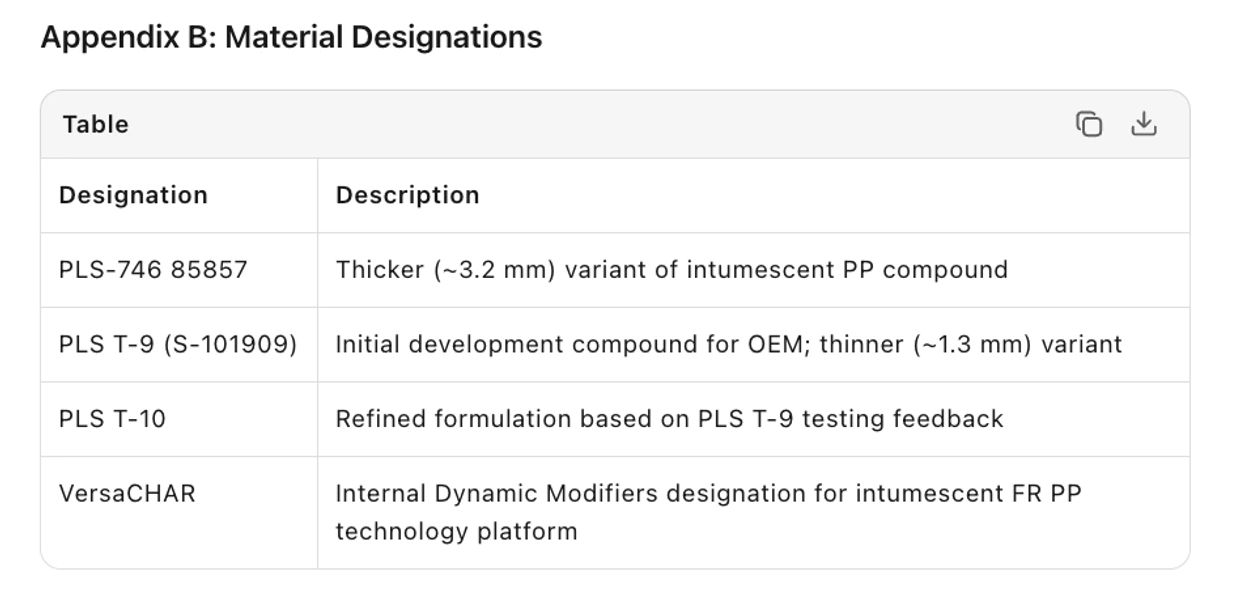
The development compound was designated with sample code S-101909 and referred to as Sample T-9 for the OEM engagement.
5.3 Qualification Testing Protocol
The qualification program followed international standards for electrical and flammability performance, with testing conducted by accredited third-party laboratories.
5.3.1 Flammability Testing
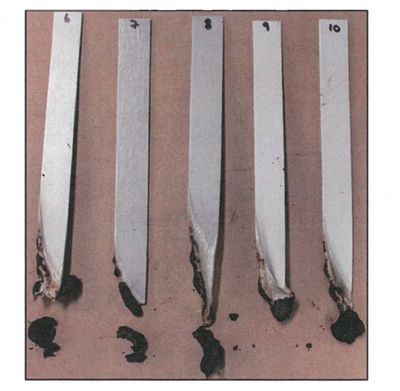
Flammability testing was conducted according to DS/EN 60695-11-10, "Fire hazard testing – Part 11-10: Test flames – 50 W horizontal and vertical flame test methods, Section 9: Test method B – Vertical burning test; V-0, V-1, or V-2" (2023a, 2023b). This standard evaluates afterflame time following ignition source removal, afterglow persistence, burn progression to specimen clamp, and molten material dripping and secondary ignition potential.
Testing was conducted on bar specimens approximately 13.0 ± 0.5 mm in width and 125 ± 5 mm in length, with thicknesses ranging from ~1.3 mm to ~3.2 mm depending on material variant. Two conditioning protocols were employed: oven conditioning at 70 ± 2 °C for 168 ± 2 hours, and room temperature conditioning at 23 ± 2 °C and 50 ± 10% relative humidity for at least 48 hours.
Test Results for Thicker Variant (~3.2 mm):
The thicker material variant demonstrated exceptional flammability performance. Samples conditioned at 70 °C achieved V-0 classification with zero afterflame time across all five replicates, no material dripping, and no cotton ignition (2023a, Table 2). The total afterflame time (t₁ + t₂) for all replicates was calculated at 0 seconds. Room temperature conditioned samples similarly achieved V-0 classification with minimal afterflame times (0–1 seconds) and no adverse burning characteristics (2023a, Table 3).
Test Results for Sample T-9 (S-101909) (Thinner Variant, ~1.3 mm):
The thinner variant presented greater technical challenges due to reduced material mass and faster heat propagation. Initial testing of oven-conditioned samples (Sample Set 1) yielded inconsistent results: three replicates achieved V-0 classification, while two replicates (Rep 2 and Rep 5) were classified as V-2 due to molten material dripping that ignited the cotton pad below the specimen (2023a, Table 4). This variability necessitated testing of a second sample set per standard protocol.
The second set of oven-conditioned samples (Sample Set 2) demonstrated improved consistency, with all five replicates achieving V-0 classification and no cotton ignition events (2023a, Table 5). Total afterflame time was calculated at 32 seconds across all replicates.
Room temperature conditioned samples showed similar variability in initial testing, with two replicates achieving V-0 and three classified as V-2 due to cotton ignition from molten drips (2023a, Table 6). The second set of room temperature conditioned samples again showed improved performance, though one replicate (Rep 3) still exhibited cotton ignition, resulting in V-2 classification for that specific specimen while others achieved V-0 (2023a, Table 7).
Follow-up Testing of the Refined Variant (Sample T-10):
Based on initial results, the Compound Manufacturer refined the formulation, producing a modified variant designated Sample T-10. Testing conducted in April–May 2023 demonstrated substantially improved performance consistency. Oven-conditioned samples achieved uniform V-0 classification with total afterflame time of only 1 second across all replicates (2023b, Table 2). Room temperature conditioned samples required two test sets due to cotton ignition in replicates 2 and 5 of the first set, but the second sample set achieved consistent V-0 classification with total afterflame time of 7 seconds (2023b, Tables 3–4).
5.3.2 Dielectric Testing
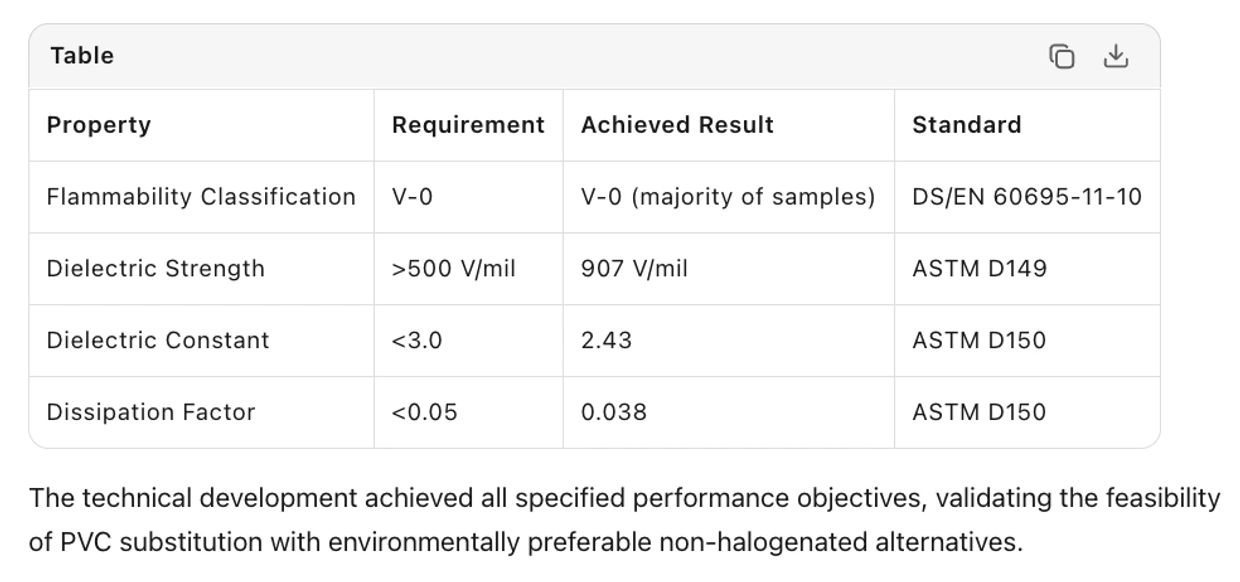
Electrical performance testing was conducted according to ASTM D149 (Dielectric Strength) and ASTM D150 (Dielectric Constant and Dissipation Factor) by an ANAB-accredited ISO/IEC 17025 testing laboratory (ACE Laboratories, 2024). Samples were conditioned for 40+ hours at 23°C/50% RH prior to testing. (See Appendix C)
5.4 Technical Achievement Summary
The qualification program successfully demonstrated that the non-halogenated intumescent polypropylene compound could meet or exceed the technical performance of incumbent PVC materials (See Appendix D).
6. Commercial Considerations and Project Outcome 6.1 Pricing and Commercial Terms
The Compound Manufacturer provided formal pricing quotation on September 29, 2022, establishing commercial terms for potential production volumes (See Appendix E).
6.2 Commercial Non-Adoption
Despite successful technical qualification, the OEM did not proceed to commercial adoption of the Sample T-9/Sample T-10 compounds. The case study documentation identifies the major downturn in the plastics industry that began in 2023 as the primary factor influencing this decision. This market contraction likely affected:
- Capital availability for material qualification and production transition
- Risk appetite for supply chain changes in uncertain economic conditions
- Strategic prioritization of sustainability initiatives versus cost containment
The non-commercialization illustrates a common challenge in materials innovation: technical success does not guarantee commercial adoption, particularly in conservative infrastructure sectors where supply chain stability and cost predictability are paramount.
7. Evolution to Strategic Opportunity 7.1 Expanded Application Concept
In mid-2023, following the initial collaboration's technical completion, the OEM re-engaged the Compound Manufacturer with a substantially expanded opportunity. The OEM inquired whether the Compound Manufacturer could develop a much larger volume application using similar formulation technology, specifically requesting demonstration of the VersaCHAR (Sample T-9) technology in combination with a barrier fabric to protect 140 million wooden power poles across North America from wildfire and extreme heat/flame events.
This inquiry represented a strategic escalation from component-level materials substitution to system-level wildfire prevention infrastructure, with potential application scope several orders of magnitude larger than the original bird diverter application.
7.2 Barrier Fabric Demonstration
The Compound Manufacturer responded by developing a demonstration combining the VersaCHAR intumescent compound with a silica barrier fabric selected for thermal protection performance. This combination was designed to create a protective system that would:
- Intumesce (expand and char) when exposed to flame or extreme heat
- Form an insulating barrier protecting the wooden pole substrate
- Resist ignition and flame propagation across the protected surface
- Maintain structural integrity under wildfire conditions
The technical response "really got their attention" and demonstrated the versatility and performance capability of the Compound Manufacturer's intumescent technology platform (Dynamic Modifiers, 2026).
7.3 Negotiation Challenges and Agreement Structure
The expanded opportunity prompted the OEM's parent company (a French multinational conglomerate) to propose a comprehensive commercial agreement. However, the proposed terms were characterized by the Compound Manufacturer as "ridiculous" and unprecedented in their experience—described as feeling "like we were joining the CIA or something." The specific concerns likely included:
- Excessive exclusivity or non-compete provisions
- Unfavorable intellectual property assignment terms
- Onerous confidentiality and non-disclosure obligations extending beyond standard industry practice
- Unbalanced risk allocation between parties
The Compound Manufacturer declined to execute the proposed agreement, terminating the expanded collaboration despite the substantial commercial potential.
7.4 Strategic Learning
The negotiation outcome, while commercially disappointing, provided valuable strategic intelligence:
- Technology Validation: The OEM's continued interest and aggressive pursuit demonstrated genuine market demand for high-performance non-halogenated flame-retardant solutions in electrical infrastructure.
- Competitive Positioning: The Compound Manufacturer's technology was sufficiently differentiated to warrant unusual contractual protective measures by a major multinational corporation.
- Application Versatility: The successful demonstration with barrier fabric revealed expansion potential beyond traditional thermoplastic compounding into composite and multi-material systems.
- Market Education: The collaboration "taught DM how far we have come with the VersaCHAR and other polyolefins additives technology," informing subsequent technology development and market positioning (Dynamic Modifiers, 2026).
8. Discussion and Analysis 8.1 Technical Achievement in Context
The successful qualification of non-halogenated flame-retardant polypropylene for electrical infrastructure applications represents a meaningful technical accomplishment. The substitution of PVC in electrical applications has been a longstanding industry challenge due to PVC's favorable cost-performance profile and established supply chains (Biron, 2015). The achievement of V-0 flammability classification with dielectric strength exceeding 900 V/mil demonstrates that intumescent polypropylene systems can meet the stringent multi-property requirements of electrical infrastructure applications.
However, the testing results also reveal formulation sensitivity to processing conditions and specimen geometry. The thinner Sample T-9 variant's inconsistent performance across replicate sets, and the improvement observed in Sample T-10, suggest that intumescent systems require careful optimization of additive dispersion, resin viscosity, and processing parameters to achieve reliable performance—particularly at reduced wall thicknesses where material mass limits char formation capacity.
8.2 Collaborative R&D Dynamics
The case illustrates several characteristic patterns in collaborative materials development:
- Rapid Technical Progress: The six-month timeline from initial engagement to completed qualification testing demonstrates the efficiency possible when compound manufacturers and OEMs align on technical objectives and resource commitment.
- Third-Party Validation: The use of accredited independent testing laboratories provided credible, defensible performance data essential for materials qualification in regulated infrastructure applications.
- Iterative Refinement: The progression from Sample T-9 to Sample T-10 based on initial test results exemplifies the iterative nature of formulation development, where testing feedback drives systematic improvement.
8.3 Market Adoption Barriers
The non-commercialization despite technical success highlights persistent barriers to materials innovation in electrical infrastructure:
- Economic Cyclicality: The 2023 plastics industry downturn demonstrates how macroeconomic conditions can override technical merit in materials selection decisions, particularly for non-critical sustainability initiatives.
- Supply Chain Conservatism: Infrastructure OEMs prioritize supply security and predictability, creating inertia against material changes even when technically viable alternatives exist.
- Total Cost Considerations: While the quoted pricing attempted PVC competitiveness, the total cost of material transition—including requalification, processing optimization, and supply chain restructuring—likely influenced the commercial decision.
8.4 Strategic Opportunity Evolution
The case provides an instructive example of how initial technical collaborations can create pathways to larger opportunities even when immediate commercial objectives fail. The OEM's return with the expanded power pole protection concept demonstrates that:
- Technical credibility established in initial collaborations creates foundation for subsequent engagement
- Successful performance demonstration builds confidence for expanded application concepts
- Market education through collaboration can reveal unaddressed needs larger than original project scope
The termination due to contractual disagreement, while suboptimal, still yielded valuable market intelligence and technology positioning insights for the Compound Manufacturer.
9. Conclusions and Implications 9.1 Key Findings
This case study demonstrates that:
- Non-halogenated flame-retardant polypropylene compounds can achieve technical performance equivalent to PVC in demanding electrical infrastructure applications, meeting international flammability standards (V-0 classification) and electrical requirements (dielectric strength >900 V/mil).
- Collaborative R&D between specialty compounders and OEMs can achieve rapid technical progress (six-month qualification timeline) when supported by clear confidentiality frameworks, third-party validation, and aligned technical objectives.
- Technical success does not ensure commercial adoption in conservative infrastructure sectors, where macroeconomic conditions, supply chain considerations, and total transition costs influence materials decisions.
- Initial technical collaborations can generate strategic opportunities exceeding original project scope, as demonstrated by the evolution from bird diverters to power pole protection systems.
- Contractual frameworks significantly influence collaboration sustainability, with overly aggressive intellectual property or exclusivity terms potentially undermining technically viable partnerships.
9.2 Industry Implications
For specialty compound manufacturers, this case underscores the importance of:
- Maintaining flexible, scalable technology platforms applicable across multiple end-use scenarios
- Developing standardized contractual frameworks that balance IP protection with commercial practicality
- Building technical marketing capabilities to attract OEM partners seeking sustainability solutions
For electrical infrastructure OEMs, the case highlights:
- The technical feasibility of PVC substitution for sustainability objectives
- The value of staged collaboration approaches that validate technical performance before large-scale commitment
- The need for contractual frameworks that enable rather than impede innovation partnerships
For the broader industry, the case contributes to understanding the implementation gap between sustainable materials innovation and commercial deployment, emphasizing that technical qualification represents only one milestone in the pathway to market transformation.
9.3 Future Research Directions
This case suggests several avenues for subsequent investigation:
- Longitudinal studies tracking the eventual commercial fate of technically qualified sustainable materials that initially fail to achieve adoption
- Comparative analysis of contractual frameworks that successfully enable versus impede collaborative innovation in specialty chemicals
- Economic modeling of the total cost of materials transition in electrical infrastructure, incorporating risk-adjusted valuation of supply chain changes
- Technical development of intumescent systems optimized for composite applications (polymer-fabric combinations) as identified in the expanded opportunity
Appendix A - Timeline of Key Events

Appendix B
Appendix C - 5.3.2

Appendix D - 5.4