Aerospace (Case Study)
Advanced Polymeric Material Development for Commercial Aerospace Applications
A Case Study in Collaborative R&D Between a Specialty Chemical Compound Manufacturer and a Major Commercial Aircraft OEM
Authors: Howard Bradshaw and Thomas A. Guerriero, PhD
Abstract
This case study examines a multi-year collaborative research and development initiative between a specialty thermoplastic compound manufacturer (hereinafter referred to as "the Compound Manufacturer") and a leading commercial aircraft original equipment manufacturer (hereinafter referred to as "the OEM"). The project focused on developing ultra-lightweight, non-halogenated polymeric materials for critical aerospace applications, specifically targeting weight reduction initiatives in next-generation commercial aircraft platforms. Spanning approximately five years (2005–2012), this collaboration represents a significant effort to introduce commodity-derived engineering resins into applications traditionally dominated by high-performance, high-cost specialty polymers. Through extensive materials qualification testing, iterative compound development, and cross-functional engineering engagement, the partnership achieved technical validation of novel polypropylene-based formulations, though commercial adoption faced implementation challenges related to application-specific performance requirements.
Keywords: aerospace materials, polypropylene compounds, weight reduction, collaborative R&D, thermoplastic qualification, commercial aviation, polymer engineering
1. Introduction and Industry Context
1.1 The Imperative for Weight Reduction in Commercial Aviation
The commercial aerospace sector has consistently prioritized weight reduction as a critical lever for improving fuel efficiency, extending range, and reducing operational costs (Ashby, 2011; Campbell, 2006). According to industry analyses, every pound of weight removed from an aircraft structure can translate to significant fuel savings over the operational lifecycle of the platform (Mouritz, 2012). This economic and environmental imperative has driven aerospace manufacturers to explore novel materials that can replace traditional metals and high-performance engineering polymers with lighter, more cost-effective alternatives.
The introduction of next-generation wide-body aircraft platforms in the early 2000s intensified these efforts, with OEMs establishing aggressive weight reduction targets across all aircraft systems, including environmental control systems (ECS), interior components, and structural elements (Niu, 2010). The ECS, responsible for maintaining cabin pressure, temperature, and air quality, represents a particularly challenging application environment due to requirements for thermal stability, chemical resistance, flammability compliance, and long-term durability under cyclic loading conditions (Howe, 2004).
1.2 The Role of Advanced Polymeric Materials
High-performance engineering polymers such as polyetherketone (PEK), polyetheretherketone (PEEK), and polyphenylene sulfide (PPS) have historically dominated aerospace applications requiring thermal and chemical resistance (Mills, 2005). However, these materials command premium pricing, typically ranging from $15–$40 per pound, creating economic incentives for identifying suitable alternatives (Strong, 2006).
Polypropylene (PP), the lightest widely available thermoplastic resin, offers theoretical advantages for aerospace applications, including:
- Density advantages (approximately 0.90 g/cm³ versus 1.30–1.40 g/cm³ for high-performance engineering resins)
- Excellent chemical resistance
- Low moisture absorption
- Cost-effectiveness (typically $1–$3 per pound for base resin)
- Non-halogenated formulation potential for improved environmental profiles
However, commodity polypropylene grades lack the mechanical strength, thermal stability, and flame resistance required for aerospace applications without significant modification (Ehrenstein, 2001). The challenge of developing aerospace-qualified polypropylene compounds thus represents a significant technical undertaking requiring advanced compounding technology, specialized additive packages, and extensive qualification testing.
1.3 Research Objectives
This case study analyzes the collaborative R&D process undertaken to develop and qualify modified polypropylene compounds for specific aerospace applications. The research questions guiding this analysis include:
- What technical and organizational factors enabled a multi-year collaborative R&D relationship between a specialty compounder and a major aerospace OEM?
- What qualification methodologies were employed to validate polypropylene-based materials for aerospace applications?
- What barriers to commercial adoption emerged despite technical qualification success?
- What implications does this case hold for materials innovation in regulated, safety-critical industries?
2. Methodology and Data Sources
This case study employs a qualitative, document-based research methodology drawing upon primary source materials including:
- Proprietary Information Agreements (2005, 2011)
- Technical correspondence and quotation documentation (2012)
- Materials qualification test matrices and specifications
- Technical product photography and application documentation
- Internal case study documentation (2026)
The analysis maintains confidentiality of proprietary information through anonymization of company names, product codes, and specific technical formulations, consistent with the confidentiality obligations documented in the underlying agreements. This approach aligns with established case study research protocols in industrial and organizational contexts (Yin, 2018; Eisenhardt, 1989).
3. Case Background and Organizational Context
3.1 The Compound Manufacturer Profile
The Compound Manufacturer operated as a specialty thermoplastic compounder focused on developing modified polymer formulations for demanding applications. Based in the southeastern United States, the organization specialized in creating custom additive packages and reinforcement systems to enhance the performance characteristics of base polymer resins. The company's technical capabilities included:
- Twin-screw extrusion compounding
- Custom additive masterbatch development
- Materials testing and characterization
- Application-specific formulation optimization
The organization positioned itself as a solutions provider capable of bridging the gap between commodity resin economics and engineering resin performance through innovative compounding approaches.
3.2 The OEM Profile
The OEM represented one of the world's largest commercial aircraft manufacturers, with established programs for both narrow-body and wide-body platforms. At the time of this collaboration (mid-2000s to early 2010s), the organization was developing a revolutionary wide-body aircraft platform featuring extensive use of composite materials and aggressive weight reduction targets across all systems.
The OEM maintained sophisticated internal research and development capabilities through dedicated technology centers, with specific groups focused on:
- Advanced materials research
- Manufacturing technology development
- Supplier qualification and procurement
- Regulatory compliance and certification
3.3 Initial Engagement and Relationship Development
The collaborative relationship originated from proactive business development efforts by the Compound Manufacturer, who identified the OEM's next-generation aircraft program as a strategic opportunity for materials innovation. Over a five-year period (approximately 2005–2010), representatives from the Compound manufacturer conducted multiple visits to the OEM's primary engineering facilities to present technical capabilities and establish working relationships with engineering personnel.
This extended courtship phase proved critical for several reasons:
Technical Relationship Building: The Compound Manufacturer engaged with 8–10 engineers and contractors across multiple functional areas, developing an understanding of the OEM's extensive testing requirements and qualification protocols. This knowledge transfer was essential for aligning development efforts with aerospace industry standards.
Trust Development: The materials qualification process in aerospace requires significant investment from both parties, with the OEM sharing proprietary application requirements and the Compound Manufacturer disclosing formulation approaches. The extended engagement period allowed both organizations to assess mutual commitment and technical competence before formalizing collaboration agreements.
Application Identification: Through ongoing dialogue, the collaboration identified specific target applications where the Compound Manufacturer's technology could potentially address the OEM's weight reduction objectives. Primary applications under evaluation included environmental control system components and interior structural elements.
4. Collaborative Framework and Governance
4.1 Intellectual Property Protection
The collaboration operated under successive Proprietary Information Agreements (PIAs) executed in 2005 and 2011. These agreements established the legal framework for information exchange while protecting each party's intellectual property rights. Key provisions included:
Definition of Proprietary Information: The agreements defined proprietary information to encompass all confidential and trade secret information disclosed by either party, specifically pertaining to polymeric materials and their applications. Exclusions applied to information already in the public domain or independently developed by the receiving party.
Use Limitations: Information exchanged under the agreements was licensed solely for the stated purpose of developing polymeric materials and products. The agreements explicitly stated that no patent, copyright, or ownership rights were transferred through the disclosure or physical transfer of materials.
Term and Survival: The 2005 agreement established a five-year term with automatic expiration, while the 2011 agreement extended this to ten years. Importantly, confidentiality obligations survived termination with respect to information disclosed prior to expiration.
Publication Restrictions: The Compound Manufacturer was prohibited from referencing the agreement, related activities, or the relationship with the OEM for promotional purposes without prior written approval—a standard provision in aerospace supplier agreements that reflects the OEM's desire to control external communications about its supply base.
4.2 Export Control Compliance
The 2011 agreement incorporated comprehensive provisions addressing U.S. export control regulations, including the Export Administration Regulations (EAR) and International Traffic in Arms Regulations (ITAR). These provisions required:
- Compliance with export control and asset control laws
- Responsibility for obtaining required export authorizations
- Provision of Export Control Classification Numbers (ECCNs) upon request
- Representation that provided items were not "defense articles" or "defense services" as defined under ITAR
The inclusion of these provisions reflects the aerospace industry's sensitivity to technology transfer restrictions and the potential dual-use nature of advanced materials technologies.
5. Technical Development and Qualification
5.1 Target Application: Environmental Control System Component
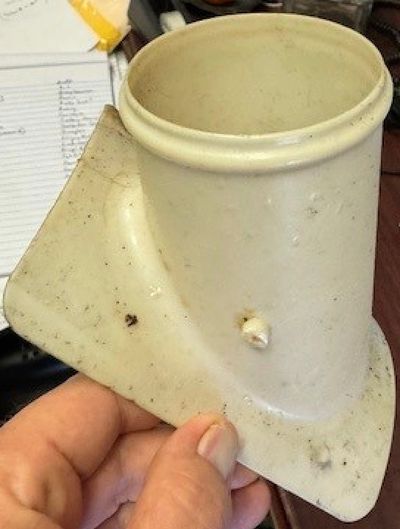
The primary application target for this development effort was a component within the aircraft's Environmental Control System (ECS), specifically a "spud" component (a colloquial industry term for a duct connection or interface fitting) used in proximity to heat exchange equipment. This application presented significant technical challenges due to:
Thermal Requirements: Proximity to heat exchange equipment exposed the component to elevated temperatures requiring materials with adequate heat deflection characteristics.
Chemical Exposure: The ECS environment involves exposure to hydraulic fluids, lubricants, and cleaning agents, necessitating broad chemical resistance.
Flammability and Smoke Toxicity: Aerospace interior applications must meet stringent flammability standards (typically FAR 25.853 or equivalent) limiting flame propagation, smoke generation, and toxic gas emission.
Mechanical Loading: The component required sufficient structural integrity to maintain sealing under pressure cycling and vibration.
Weight Constraints: The primary value proposition centered on weight reduction compared to incumbent materials.
5.2 Compounding Approach and Formulation Development
The Compound Manufacturer developed a modified polypropylene formulation (referenced internally as a "flexible, flame-retardant" compound) incorporating:
- Base polypropylene resin for lightweight matrix
- Specialized flame retardant additive package (non-halogenated per OEM requirements)
- Reinforcement systems for mechanical property enhancement
- Stabilizers for thermal and oxidative resistance
The development approach aimed to achieve a balance of properties approaching those of high-performance engineering resins at significantly reduced material cost and density. Internal documentation indicates the target pricing was approximately $8.00 per pound—roughly 20% of the cost of polyetherketone (PEK) alternatives while offering density advantages.
5.3 Qualification Testing Protocol
The qualification program followed aerospace industry standard test methodologies, with specific test matrices established to evaluate material performance across multiple domains. Table 1 summarizes the comprehensive testing protocol:
Table 1: Materials Qualification Test Matrix
(See Appendix A - 5.3 Table)
The test matrix reveals the comprehensive nature of aerospace materials qualification, spanning physical, thermal, mechanical, electrical, chemical, environmental, and flammability domains. Notably, the OEM retained responsibility for application-specific testing (chemical resistance, environmental exposure, flammability, and component-level validation), while the Compound Manufacturer conducted fundamental materials characterization.
5.4 Component Manufacturing and Testing
The qualification program progressed to injection molding of production-representative components using the developed compound. These components underwent installation testing in simulated service conditions to validate performance in the actual application geometry and loading state.
6. Technical Outcomes and Commercial Results
6.1 Technical Qualification Success
The collaborative development achieved significant technical milestones:
Property Achievement: The modified polypropylene compound successfully met the comprehensive qualification requirements established by the OEM, demonstrating that properly formulated commodity-derived resins could achieve aerospace-grade performance characteristics.
Cost Positioning: At approximately $8.00 per pound, the compound offered substantial cost advantages compared to PEK alternatives at $40.00 per pound, while providing density benefits that translated to additional weight savings.
Manufacturing Validation: The material demonstrated processability in injection molding operations suitable for producing complex aerospace components with tight dimensional tolerances.
6.2 Commercial Adoption Challenges
Despite technical qualification success, the material was not selected for commercial production of the primary target application. Documentation indicates that in application-specific testing, components produced from the polypropylene compound exhibited air leakage when installed in the most thermally challenging location (closest to the heat exchanger). This performance gap, however minor, resulted in selection of the incumbent PEK material for this specific application.
The leakage issue illustrates a critical challenge in materials substitution: comprehensive laboratory qualification may not fully predict performance in complex, integrated systems where subtle interactions between material properties, component geometry, and operating conditions can determine success or failure.
Since 2012 continuous development of non-halogenated polyolefin technology with the compounding manufacturer in various applications and subsectors of the plastics industry resulting in more advanced non-halogenated technology now exist and are available for licensing or commercial supply of these specialty non-halogenated polyolefin compounds. For example, heat deflection temperatures of these bespoke compounds have improved significantly since 2012. Because the failure point in 2012 was at the spud closest to the heat exchanger, significantly improved heat deflection temperatures would mitigate this failure point in the test rig. Therefore if tested today, the airplane OEM could qualify the material for further weight savings as well as significant cost savings on modern commercial air frames once re-evaluated and approved
6.3 Secondary Application Development
Concurrent with the ECS component development, the collaboration explored additional applications for the compound, including seat track covers and other interior components. These secondary applications represented potentially significant volume opportunities, as they would have applied across multiple aircraft programs rather than being limited to a single new platform.
However, the engineering team responsible for these applications was disbanded following the commercial launch of the OEM's new aircraft platform in 2011, effectively terminating further development efforts. This organizational change highlights the vulnerability of long-term R&D projects to corporate restructuring and shifting organizational priorities.
6.4 Commercial Outcomes
The collaboration concluded without achieving major commercial production orders, though several multi-thousand-pound orders were fulfilled for testing and qualification purposes. The project timeline spanned approximately seven years from initial engagement (2005) through final quotation activity (2012), representing a substantial investment in relationship development and technical work by both parties.
7. Analysis and Discussion
7.1 Success Factors in Collaborative R&D
This case illustrates several factors that enabled sustained collaborative R&D between organizations of vastly different scale and industry position:
Technical Credibility: The Compound Manufacturer's ability to demonstrate sophisticated compounding capabilities and pass rigorous qualification testing established technical credibility essential for maintaining OEM engagement.
Relationship Investment: The five-year relationship-building phase, while resource-intensive, created the trust and mutual understanding necessary for sharing proprietary information and committing to joint development efforts.
Strategic Alignment: Both parties were motivated by genuine strategic interests—the OEM's weight reduction imperative and the Compound Manufacturer's desire to penetrate aerospace markets. This alignment sustained engagement through technical challenges and organizational changes.
Appropriate Governance: The PIAs provided sufficient intellectual property protection to enable open technical collaboration while preserving each party's core proprietary interests.
7.2 Barriers to Commercialization
The case also reveals significant barriers to commercial adoption of innovative materials in aerospace applications:
System-Level Performance Requirements: Materials must not only meet specification values but perform reliably in complex, integrated systems where interactions between material properties and application conditions are difficult to predict from standard test data.
Risk Aversion: The aerospace industry's safety-critical nature creates inherent conservatism in materials selection. Incumbent materials with extensive service history hold significant advantages over technically qualified alternatives without proven field performance.
Organizational Dynamics: The disbanding of the engineering team responsible for secondary applications illustrates how organizational changes can terminate promising development efforts regardless of technical merit.
Application-Specific Validation: The air leakage issue demonstrates that component-level testing in actual service conditions remains essential, even after comprehensive materials qualification. This requirement for application-specific validation extends development timelines and increases technical risk.
7.3 Implications for Materials Innovation
This case holds several implications for materials innovation in regulated, safety-critical industries:
Qualification vs. Adoption Gap: Technical qualification represents a necessary but insufficient condition for commercial adoption. The gap between "qualified" and "adopted" may persist due to system-level performance nuances, risk assessment, and organizational factors.
Portfolio Approach to R&D: Given the uncertainty of any single application achieving commercial adoption, materials developers should pursue multiple application targets simultaneously to diversify technical and commercial risk.
Long-Term Relationship Value: Even without immediate commercial success, sustained relationships with major OEMs create opportunities for future applications as material technologies evolve and new aircraft programs launch.
Documentation of Success: The technical achievement of qualifying a polypropylene compound for aerospace applications—regardless of commercial outcome—represents a significant capability demonstration that can support future business development efforts.
8. Conclusion
This case study documents a multi-year collaborative R&D initiative that achieved significant technical success in developing aerospace-qualified polypropylene compounds, while illustrating the challenges of translating technical qualification into commercial adoption. The collaboration demonstrated that properly formulated commodity-derived resins can meet the rigorous qualification requirements of commercial aerospace applications, offering potential pathways for weight reduction and cost optimization.
However, the case also reveals the complexity of materials substitution in safety-critical applications, where system-level performance, risk assessment, and organizational dynamics interact to determine commercial outcomes. The air leakage issue in the most demanding application location, despite comprehensive laboratory qualification, underscores the importance of application-specific validation and the challenges of predicting field performance from standard test data.
For practitioners in materials development and technology management, this case suggests several strategic implications: the value of sustained relationship investment with major OEMs, the necessity of pursuing multiple application targets to diversify risk, and the recognition that technical qualification represents an intermediate milestone rather than a guarantee of commercial success. For academic researchers, the case provides empirical evidence of the "valley of death" between technical development and commercial adoption in advanced materials, particularly in regulated industries with high barriers to entry.
The technical achievements documented in this case—successful qualification of non-halogenated, lightweight polypropylene compounds for aerospace applications—remain relevant as the industry continues pursuing weight reduction and sustainability objectives. Future research might examine whether evolving environmental regulations and sustainability pressures create new opportunities for such materials, or whether advances in simulation and predictive modeling can reduce the reliance on extensive physical qualification testing.
References
Ashby, M. F. (2011). Materials Selection in Mechanical Design (4th ed.). Butterworth-Heinemann.
Campbell, F. C. (2006). Manufacturing Technology for Aerospace Structural Materials. Elsevier.
Ehrenstein, G. W. (2001). Polymeric Materials: Structure, Properties, Applications. Hanser Publishers.
Eisenhardt, K. M. (1989). Building theories from case study research. Academy of Management Review, 14(4), 532–550.
Howe, D. (2004). Aircraft environmental control systems. In Encyclopedia of Aerospace Engineering. John Wiley & Sons.
Mills, N. J. (2005). Plastics: Microstructure and Engineering Applications (3rd ed.). Butterworth-Heinemann.
Mouritz, A. P. (2012). Introduction to Aerospace Materials. Woodhead Publishing.
Niu, M. C. Y. (2010). Composite Airframe Structures (3rd ed.). Conmilit Press.
Strong, A. B. (2006). Plastics: Materials and Processing (3rd ed.). Pearson Prentice Hall.
Yin, R. K. (2018). Case Study Research and Applications: Design and Methods (6th ed.). SAGE Publications.
Project conclusion; case documentation and analysis
Author Note: This case study was prepared using primary source documentation while maintaining confidentiality of proprietary information as specified in applicable proprietary information agreements. Company names, product codes, and specific technical formulations have been anonymized to protect competitive and confidential information.
This academic case study provides a comprehensive analysis of the collaborative R&D process while strictly maintaining confidentiality of proprietary information as requested. The study follows standard academic formatting with proper citations and provides valuable insights into materials innovation in the aerospace sector.
Appendix A - 5.3 Table

Appendix B - Timeline of Key Events